Section 07
A Lawyer's Estate: Ahmed Cemal Bey
This section is made up of the keepsakes a jurist left behind. Through his own belongings, the estate of Ahmed Cemal Bey tells of a professional life that stretches from the last years of the Ottoman Empire to the early years of the Republic.
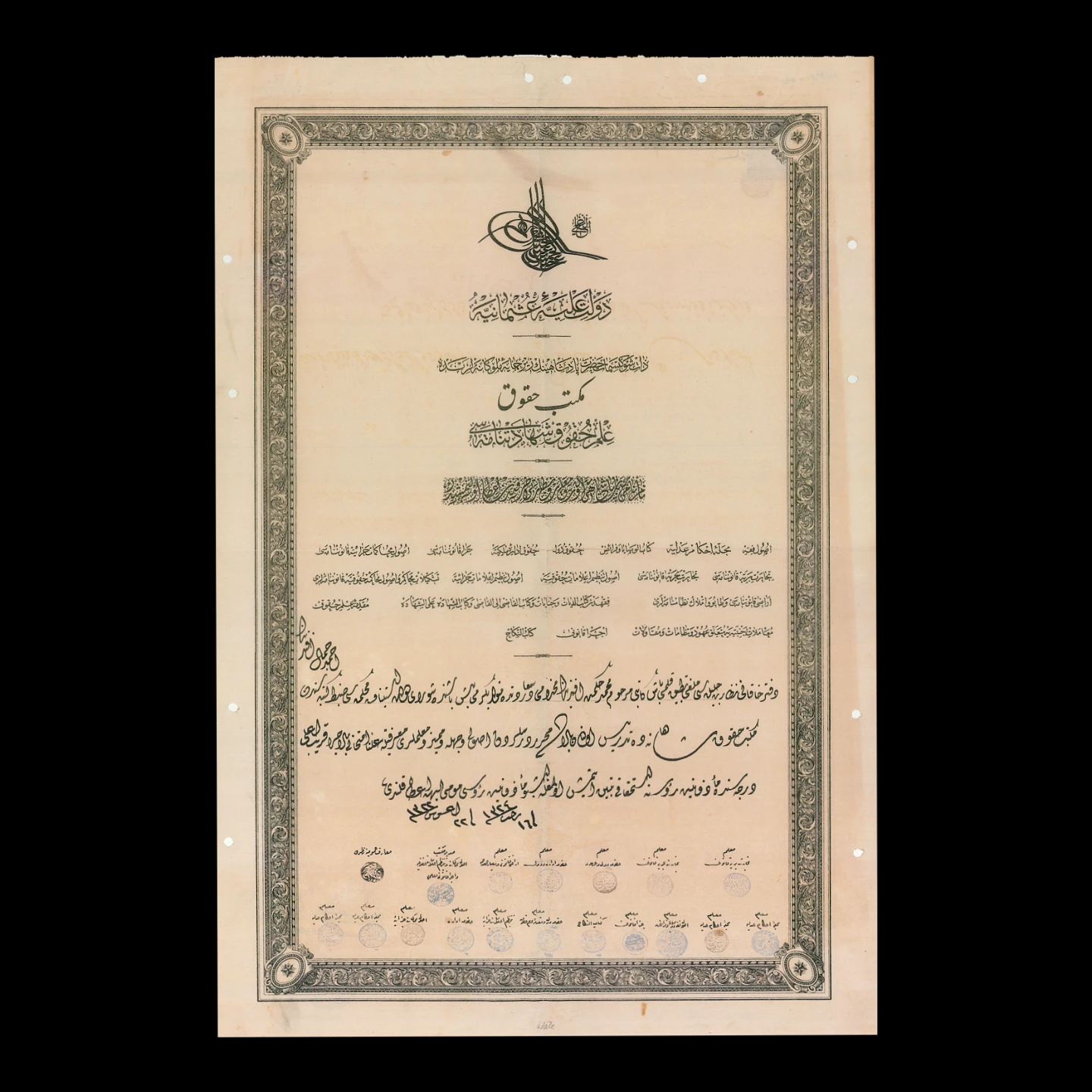
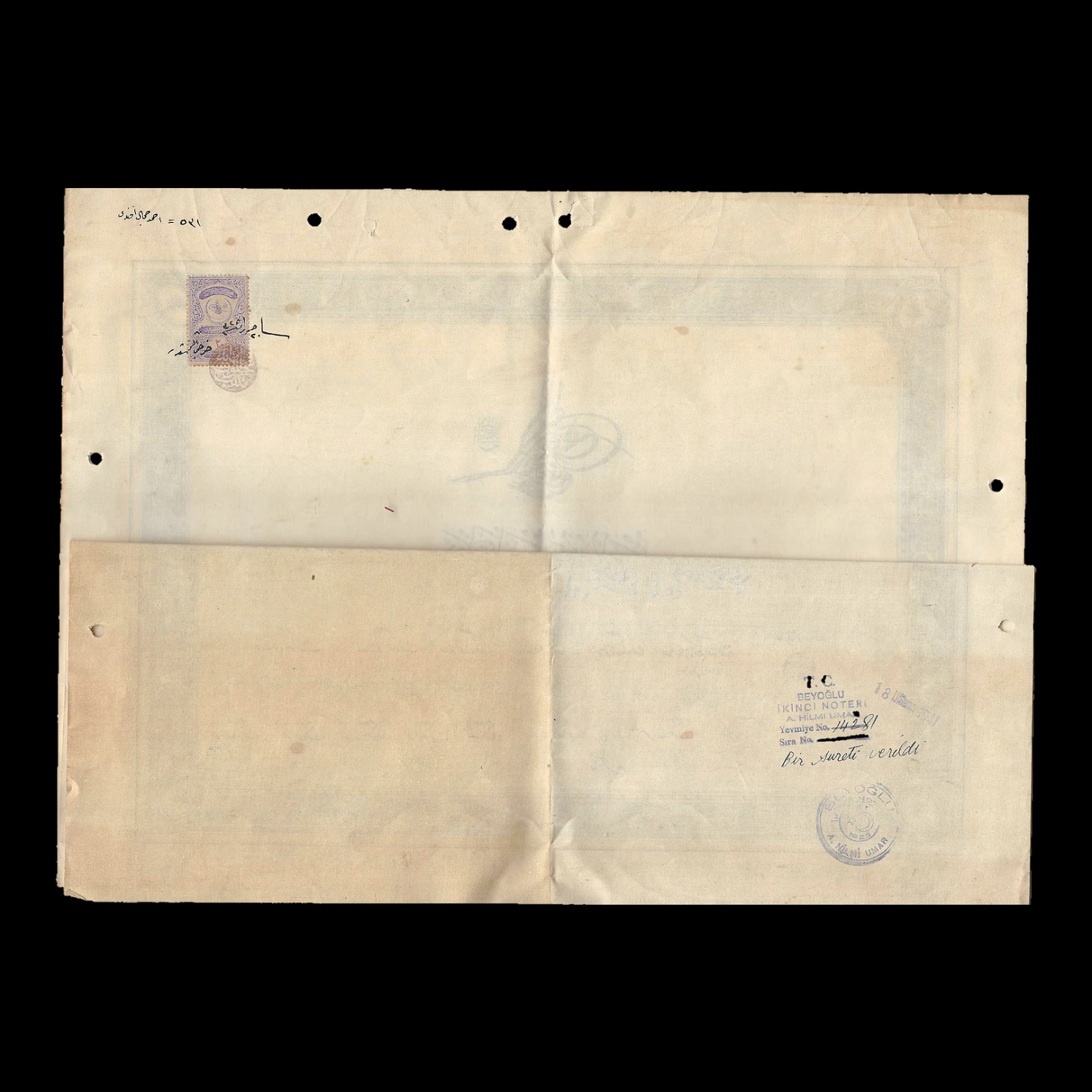
The story begins at the Mekteb-i Hukuk (School of Law). According to his diploma, dated August 22, 1322 (September 4, 1906), he was born in Istanbul, was twenty-five years old and worked as a court clerk (zabıt kâtibi) at a court of appeal. His father had served as head clerk of the Tatbik Kalemi of the Defter-i Hâkânî, the Ottoman land registry. The brass seal inscribed "Ahmed Cemal 1328" is a trace of the years when a seal took the place of a signature.
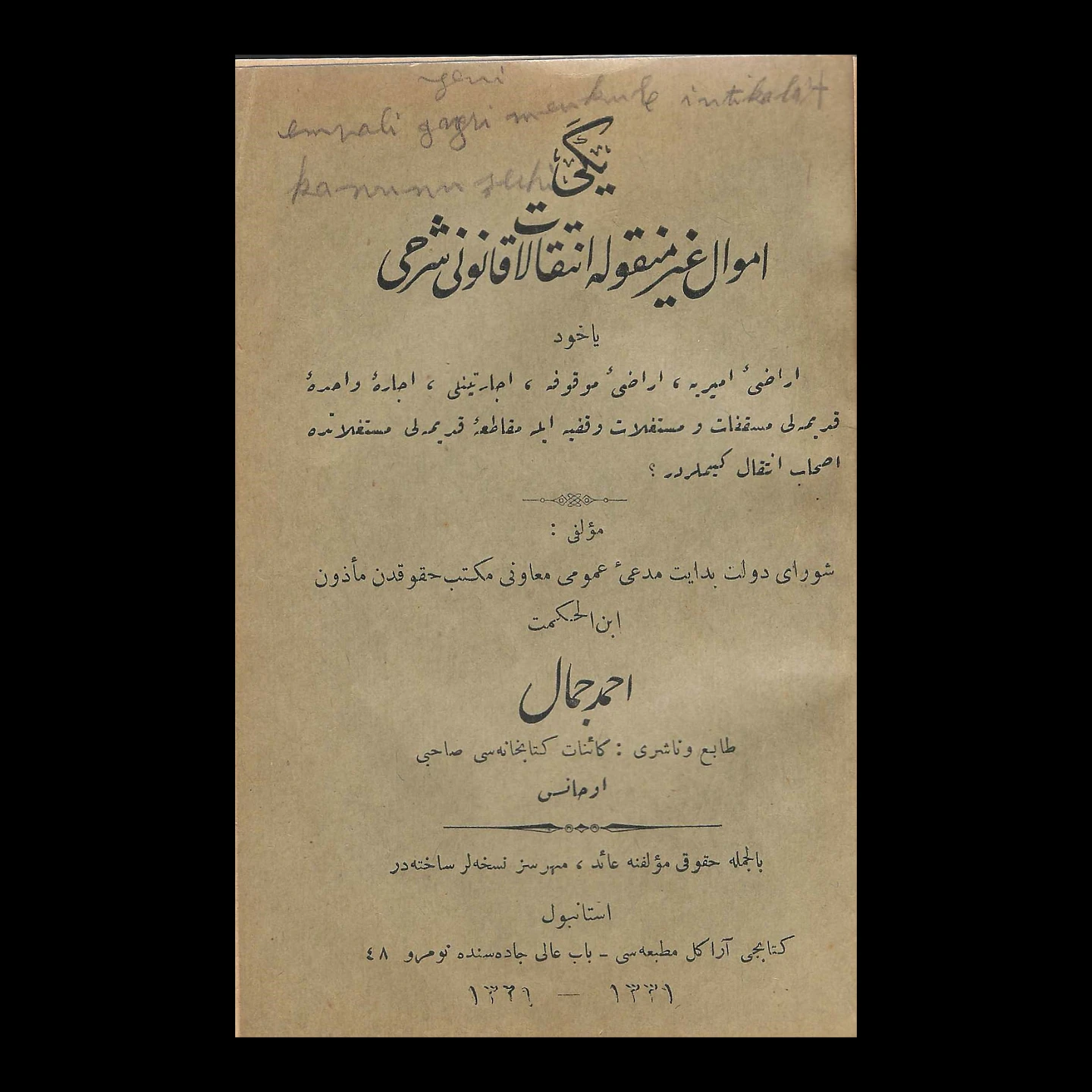
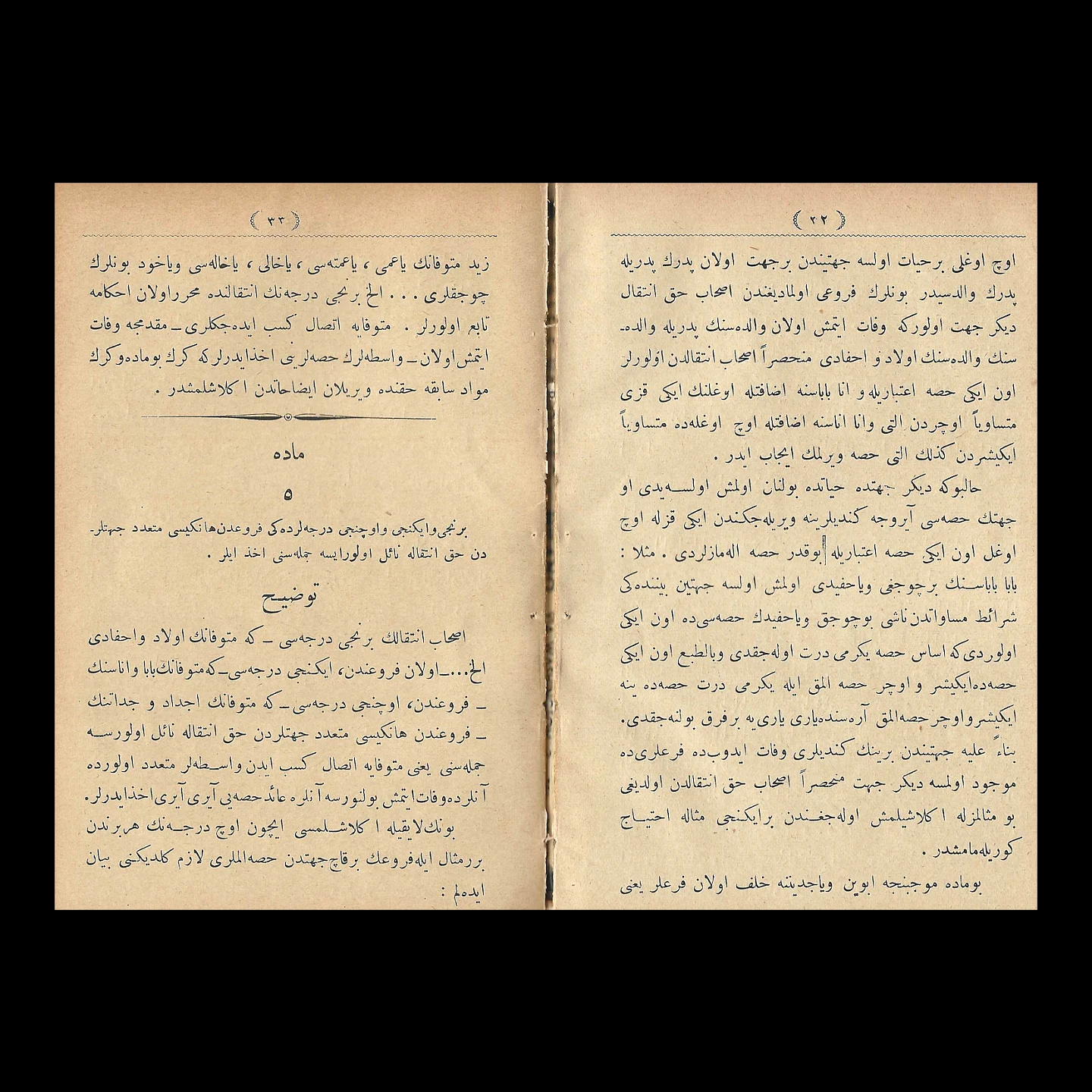
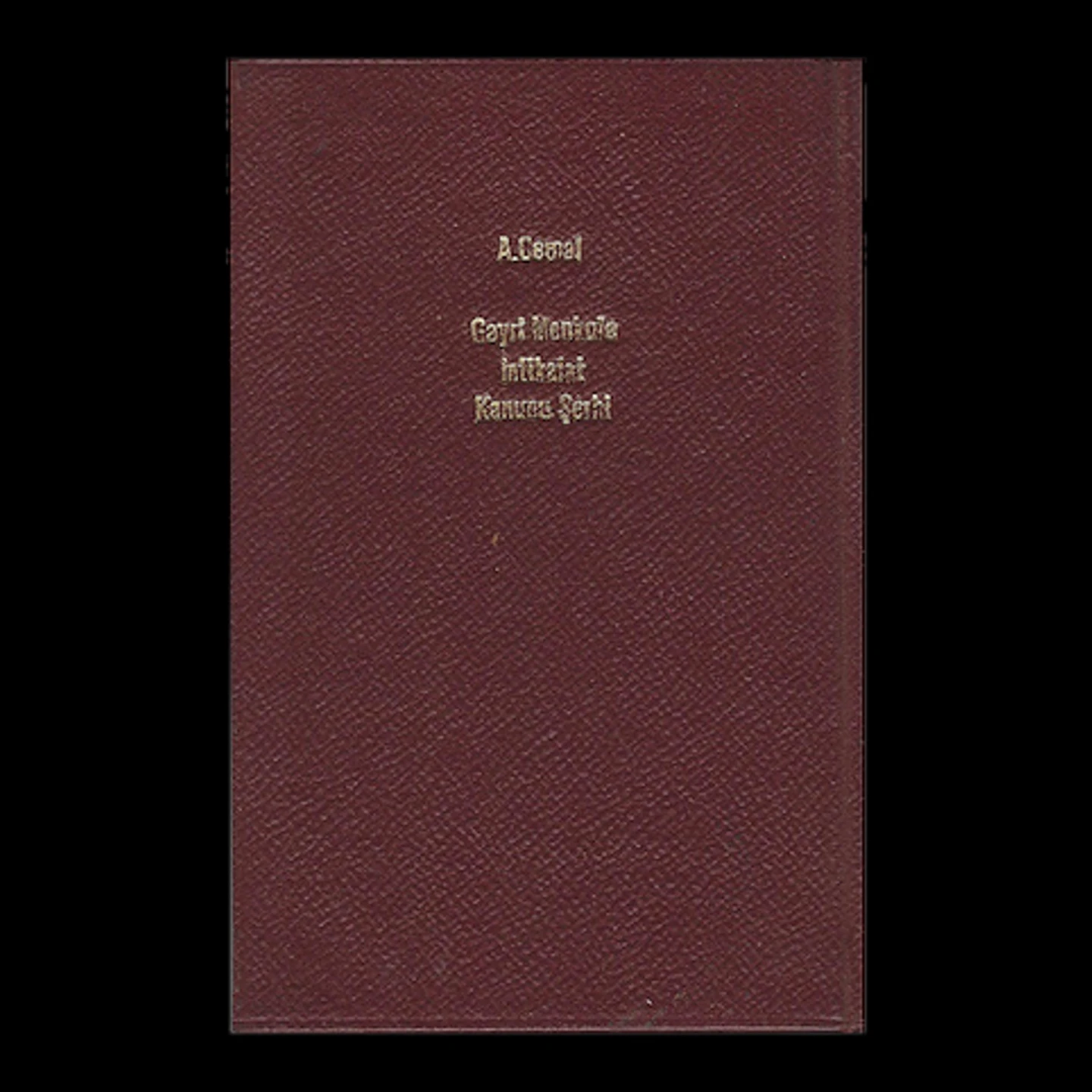
His Yeni Emvâl-i Gayr-i Menkûle İntikâlât Kânûnu Şerhi (Commentary on the New Law on the Transfer of Immovable Property), published in 1913, explains the law on the transfer of immovable property that entered into force the same year. This provisional law, dated February 21, 1328 (March 6, 1913), sets out in a single enactment who acquires the right of disposition (tasarruf) over state land (mîrî) and icâreteynli waqf property after the holder's death. On the cover, the author's name appears with the titles graduate of the Mekteb-i Hukuk and deputy public prosecutor (müddeiumumi muavini).
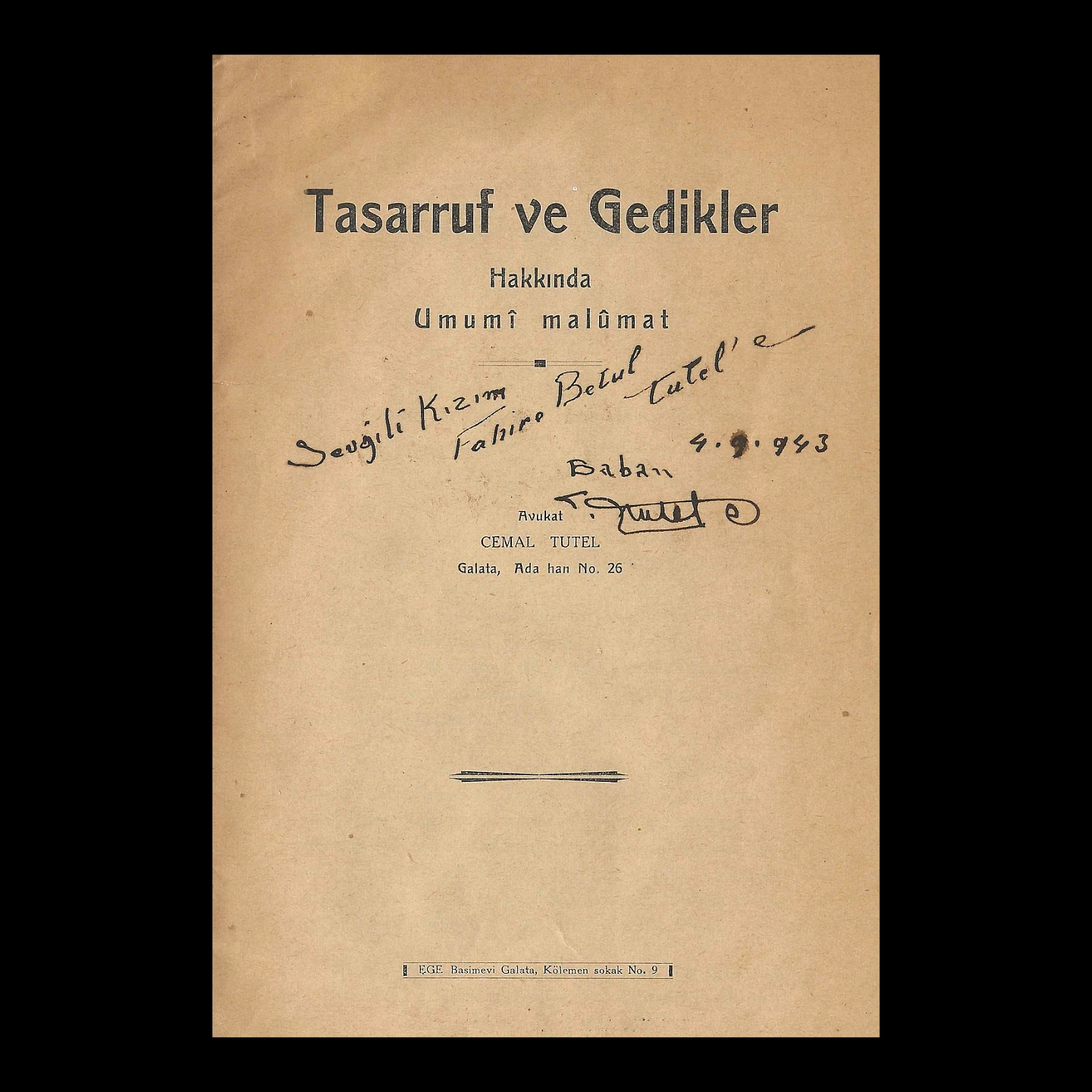
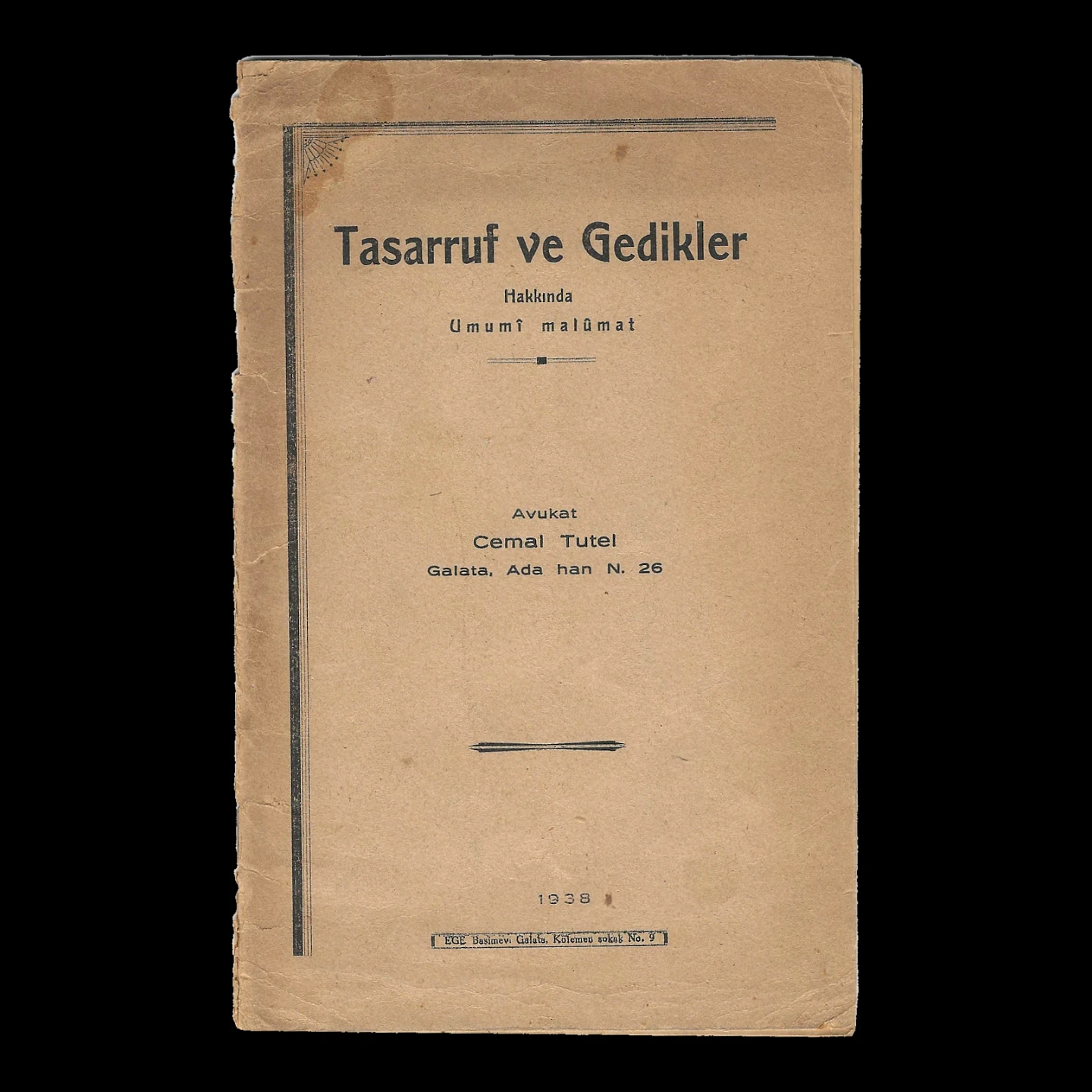
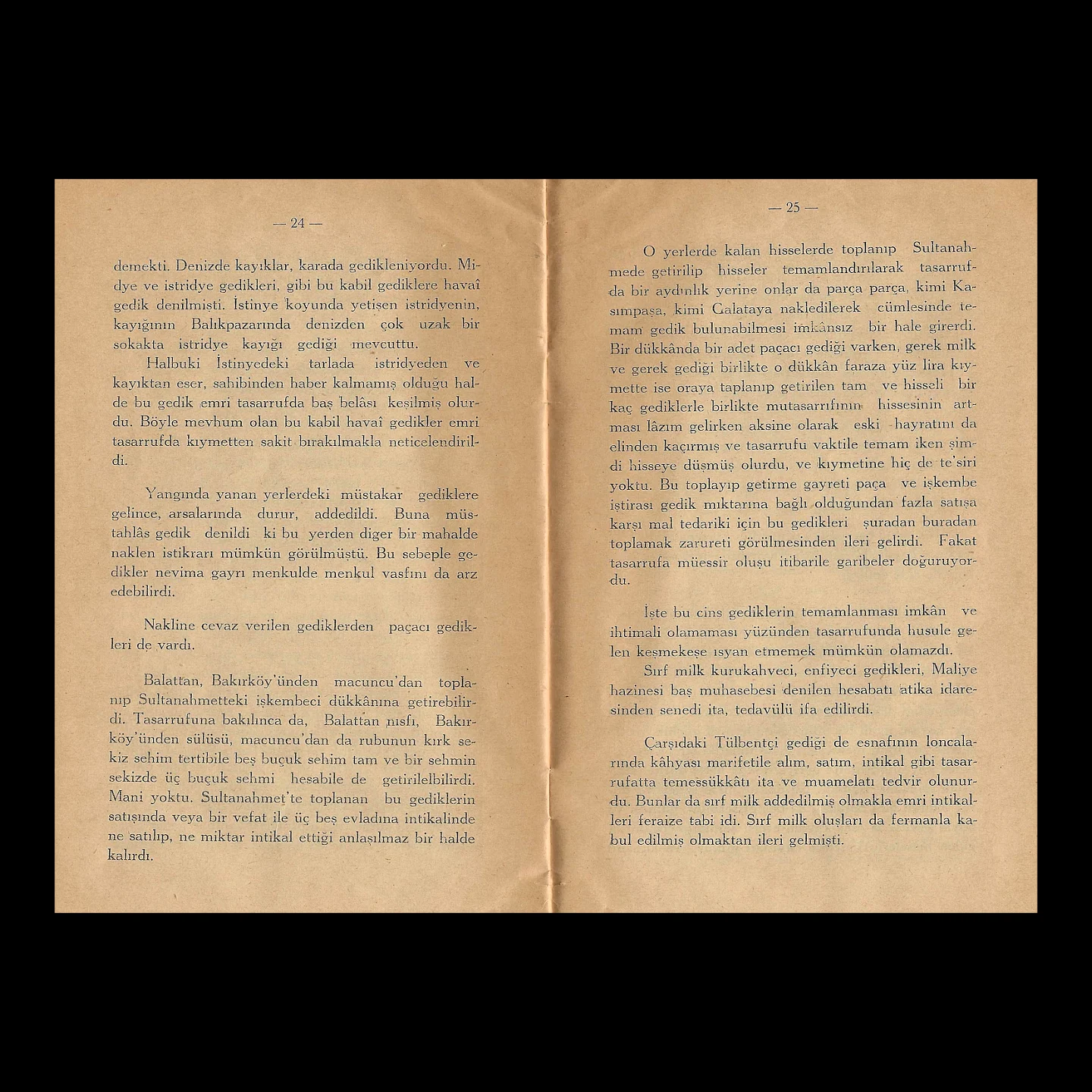
A year later, on April 30, 1914, he registered with the Istanbul Bar Association under roll number 276. His office was in the Birinci Vakıf Han in 1922 and, from 1924 to 1952, in the Ada Han in Galata. Under the Surname Law he took the surname Tutel, and in 1938 he published Tasarruf ve Gedikler Hakkında Umumi Malumat (General Information on Disposition Rights and Gediks) under the name "Avukat Cemal Tutel, Galata, Ada Han No. 26". Five years later he signed a copy of this work for his daughter, with a dedication that opens with the words "Sevgili kızım" (My dear daughter).
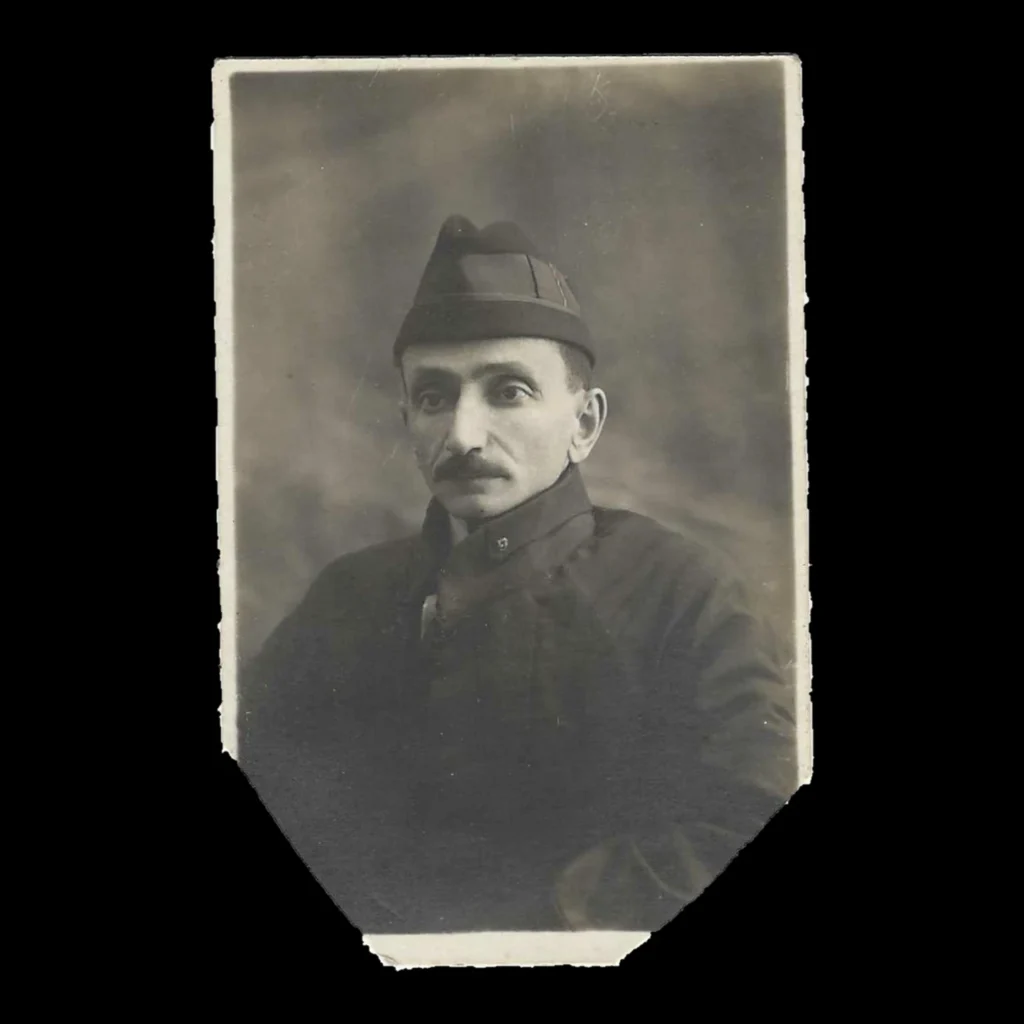
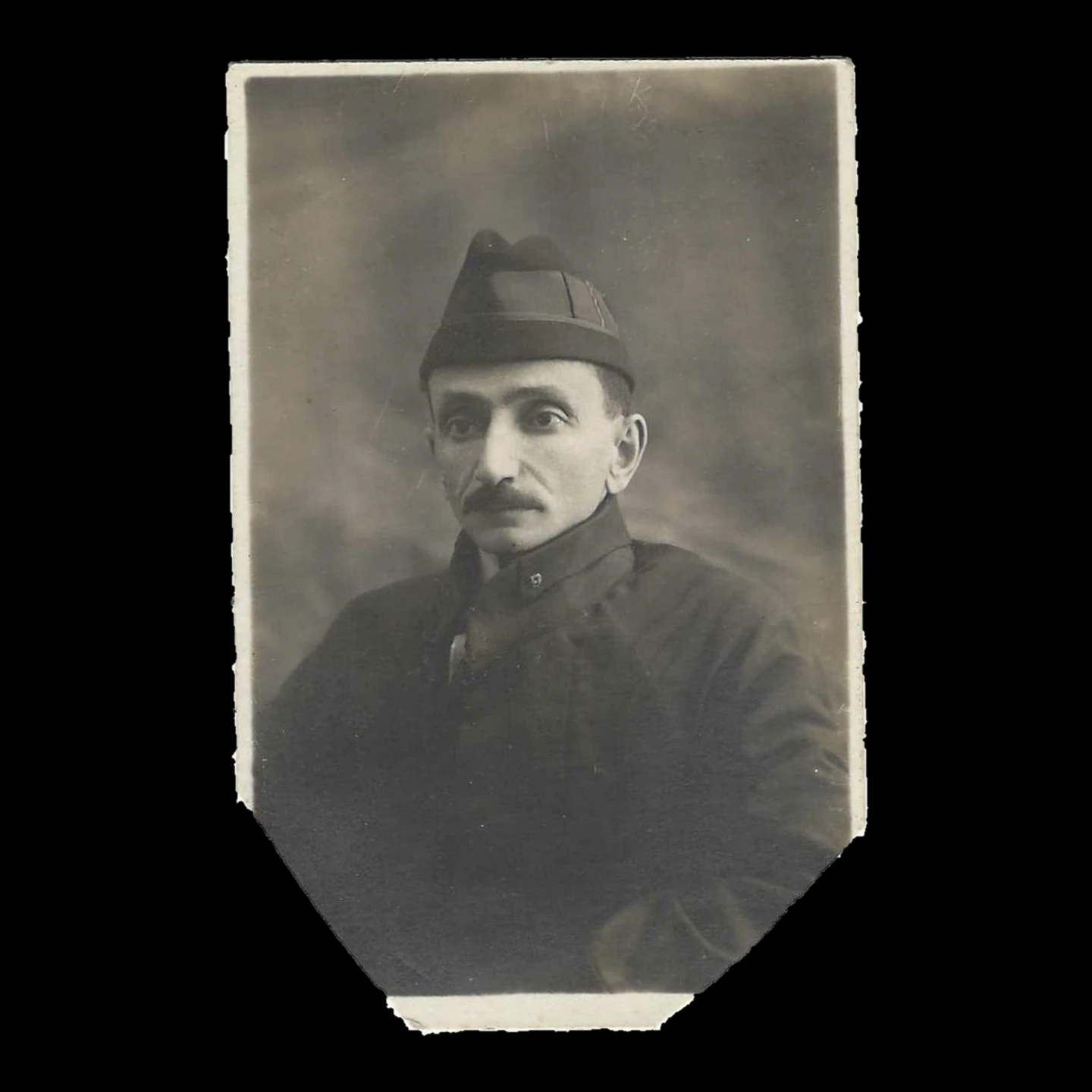
Inside the lawyer's cap, which dates from the early Republican period, are the label "E.D. Doikos Pera" and the name "Cemal" written in pencil. His passport photograph in robe and cap puts a face to the owner of these belongings.
Real estate law, old disposition records and Ottoman title deeds are still among our firm's practice areas today. Ahmed Cemal Bey's works show how the same legal questions were dealt with a hundred years ago.
Sources: Tugay Aydın, "İstanbul Barosu Levhalarına Göre İlk 1.000 Sicil", Türk Hukuk Tarihi Araştırmaları, no. 38 (2024); TDV İslâm Ansiklopedisi, article "İntikal".